A binary tree can be shown like this:
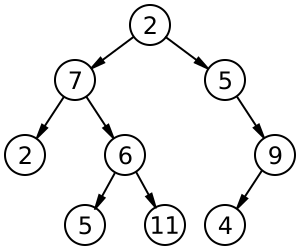
To make an in-order traversal of a binary tree what you have to do is take the in-order traversal of the left child of root add the root than add the in-order traversal of the right child of root. It can be clearly understood that this is a recursive function. My way of telling how to do an in-order traversal includes doing in-order traversals in it so there you go. So, the in-order traversal of the tree pictured above would be [2, 7, 5, 6, 11, 2, 5, 4, 9]. It's kind of late, so correct me if this list is wrong, but you'll get the idea.
Trees can be written as nested lists or we can declare them as a class. Traversals are only one thing we can recursively implement on trees, I'm sure we will work on them trying to do more complicated stuff in the coming lectures and labs. Take care!

No comments:
Post a Comment